Master the art of valuing small and medium enterprises with real-world techniques that go beyond basic accounting.
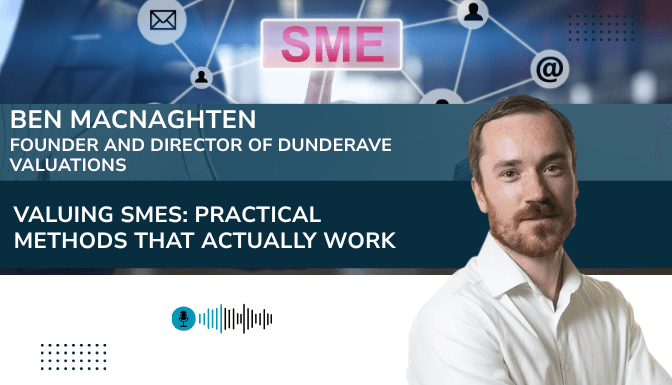
Standard valuation models fall apart when applied to Small and Medium-sized Enterprises (SMEs). Textbooks teach you how to value multi-billion-dollar public corporations, but those same formulas fail miserably when assessing a privately held, main-street business or a lower-middle-market firm.
"Valuing SMEs: Practical Methods That Actually Work" bridges the critical gap between academic financial theory and real-world market realities. This comprehensive course cuts through the theoretical fluff to deliver battle-tested techniques used by successful M&A advisors, business brokers, and private equity professionals. You will learn how to look beyond messy financial records, uncover the true cash-generating power of an SME, and arrive at a defensible, accurate valuation.
What You Will Learn:

Founder and Director @ Dunderave Valuations
Prior to founding Dunderave, Ben was Head of the Attestation (tax and accounting) and Expert Teams of Valuation Consulting, a boutique valuation firm with an established reputation for tax and specifically, HMRC compliant valuations. He started working on valuations whilst at KPMG in their Private Equity Group, providing assurance over the valuations of mid-tier Private Equity houses investments and working on a number of transactions, before joining CVR Global (as acquired by Begbies Traynor) where he specialised in expert and advisory valuations in the context of insolvency, administration and restructuring engagements. Mr Macnaghten is: An Associate of the Institute of Chartered Accountants in England and Wales A Member of the Royal Institution of Chartered Surveyors (Business and Share Valuation Pathway) An Associate Member of The Academy of Experts An Editor of The Valuer A Member of BVIUK’s Future Directions on Business Valuation Board Mr Macnaghten was also the Chairman of VRG’s Litigation Committee in 2025 and has delivered numerous webinars, presentations, and authored published articles on business and share valuation related matters. Prior to his involvement in valuations, he started his career at Moore Stephens (now part of BDO) where he trained and qualified as a Chartered Accounant.
